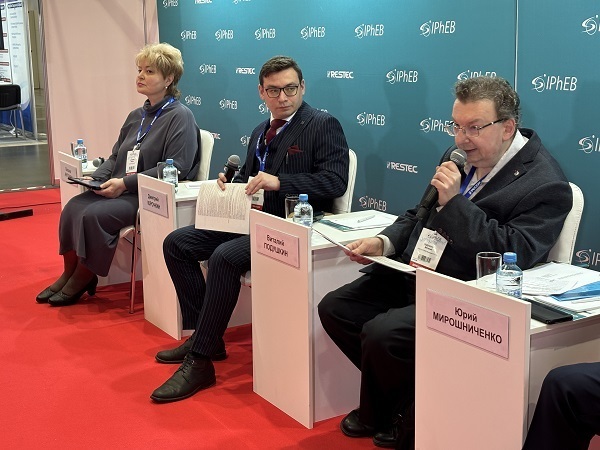
As part of the international IPhEB forum, the 1st All-Russian Scientific and Practical Conference "Pharmaceutical Chemistry: Practical Implementation of Applied Science" was held, becoming one of the key platforms for discussing fundamental changes in the sector of extemporaneous pharmaceutical manufacturing. Particular attention from the professional community was drawn to the track dedicated to the quality control of medicines in pharmacy organizations. The relevance of the discussion was driven by a large-scale update of the regulatory framework in 2023–2025, including the introduction of the State Pharmacopoeia of the Russian Federation, 15th edition, and new rules of good pharmacy practice.
Regulatory Foundation and Integration with the Pharmacopoeia
The section was moderated and ideologically led by leading experts from the Saint Petersburg State Chemical and Pharmaceutical University (SPCPU). Vitaly Podushkin, Candidate of Pharmaceutical Sciences and Associate Professor of the Department of Pharmaceutical Chemistry, presented an in-depth analysis of the current state of intra-pharmacy control. He emphasized that the adoption of Ministry of Health Order No. 249n and the subsequent Order No. 259n on good pharmacy practice marked a transition to a risk-oriented management model. In his report, Mr. Podushkin noted the critical importance of integrating extemporaneous manufacturing with pharmacopoeial analytical methods. However, the expert rightly pointed out a technical gap: while the 15th edition of the State Pharmacopoeia focuses on a high-tech instrumental base, the majority of manufacturing pharmacies are still limited to express methods such as titrimetry and refractometry. This challenge requires not only an update of equipment but also the adaptation of complex methods to the conditions of small laboratories.
The topic of regulatory framework was continued by Dmitry Yurochkin, Deputy Head of the Laboratory for Regulatory Relations and Good Practices at SPCPU. His presentation focused on the development processes of general pharmacopoeial monographs for extemporaneous preparations. Dmitry presented the unique experience of Saint Petersburg in implementing regional support mechanisms, in particular through a draft amendment to the city's Social Code, which should ensure patients have unhindered access to manufactured preparations within state guarantee programs. He was joined by Devi Mamedov, a researcher at the same laboratory, who raised the issue of implementing good manufacturing and dispensing practices nationwide. He proposed a three-level personnel model and a risk-oriented differentiation of requirements, which would significantly improve product safety by eliminating incidents related to sterility breaches.
Scientific Approach to Stability and Pediatric Formulations
The scientific block of the conference featured research aimed at solving specific technological problems. Associate Professor of the Department of Pharmaceutical Technology at SPCPU, Tatiana Sineva, highlighted the critically important topic of standardization of pediatric drugs. She emphasized that extemporaneous manufacturing remains the only way to ensure individualized dosages and the absence of harmful excipients in pediatrics. Tatiana presented the results of work on extending the shelf life of multivitamin syrups and powders through the use of membrane filtration and packaging optimization, which represents a significant step forward for pharmacy practice.
The issue of stability studies was examined in detail by Nadezhda Krishtanova, Candidate of Pharmaceutical Sciences and Associate Professor of the Department of Pharmaceutical Chemistry at SPCPU. Using resorcinol as an example, she demonstrated how validation of analytical methods allows for establishing justified shelf lives. According to her data, even a five percent change in the active ingredient content signals the need to revise the regulations, confirming the necessity of labor-intensive but mandatory stability studies for each formulation.
Strategic Partnership and Overcoming Barriers
A practical perspective on pharmacy-physician interaction was presented by Oksana Antoniuk, Territory Manager at Petersburg Pharmacies JSC. She noted that the revival of the manufacturing base is impossible without developing new competencies among doctors, who have often lost the skill of writing complex prescriptions. The company is systematically working to overcome this barrier by helping physicians prepare individual formulations and testing them against the prescription regulations. Oksana is convinced that the synergy of pharmacist and physician knowledge is key to improving the accessibility of personalized medicine.
Economic and organizational aspects of optimizing manufacturing pharmacies were analyzed by Vyacheslav Morozov, Head of the Pharmacy Department at North Ossetian State University. He identified a number of acute problems: from low profitability and high equipment costs to the inability to transfer manufactured preparations between pharmacies. Vyacheslav proposed optimization paths through the introduction of approved unified formulations and a revision of prescription dispensing requirements for a number of safe antiseptic agents.
Ekaterina Alekseichuk presented an algorithm for the quality control of 93% medical oxygen in the field. The use of mobile short-cycle adsorption units requires strict adherence to pharmacopoeial monograph FS 2.2.0037, which is critically important for emergency care and hospital settings.
Regulatory Foundation and Integration with the Pharmacopoeia
The section was moderated and ideologically led by leading experts from the Saint Petersburg State Chemical and Pharmaceutical University (SPCPU). Vitaly Podushkin, Candidate of Pharmaceutical Sciences and Associate Professor of the Department of Pharmaceutical Chemistry, presented an in-depth analysis of the current state of intra-pharmacy control. He emphasized that the adoption of Ministry of Health Order No. 249n and the subsequent Order No. 259n on good pharmacy practice marked a transition to a risk-oriented management model. In his report, Mr. Podushkin noted the critical importance of integrating extemporaneous manufacturing with pharmacopoeial analytical methods. However, the expert rightly pointed out a technical gap: while the 15th edition of the State Pharmacopoeia focuses on a high-tech instrumental base, the majority of manufacturing pharmacies are still limited to express methods such as titrimetry and refractometry. This challenge requires not only an update of equipment but also the adaptation of complex methods to the conditions of small laboratories.
The topic of regulatory framework was continued by Dmitry Yurochkin, Deputy Head of the Laboratory for Regulatory Relations and Good Practices at SPCPU. His presentation focused on the development processes of general pharmacopoeial monographs for extemporaneous preparations. Dmitry presented the unique experience of Saint Petersburg in implementing regional support mechanisms, in particular through a draft amendment to the city's Social Code, which should ensure patients have unhindered access to manufactured preparations within state guarantee programs. He was joined by Devi Mamedov, a researcher at the same laboratory, who raised the issue of implementing good manufacturing and dispensing practices nationwide. He proposed a three-level personnel model and a risk-oriented differentiation of requirements, which would significantly improve product safety by eliminating incidents related to sterility breaches.
Scientific Approach to Stability and Pediatric Formulations
The scientific block of the conference featured research aimed at solving specific technological problems. Associate Professor of the Department of Pharmaceutical Technology at SPCPU, Tatiana Sineva, highlighted the critically important topic of standardization of pediatric drugs. She emphasized that extemporaneous manufacturing remains the only way to ensure individualized dosages and the absence of harmful excipients in pediatrics. Tatiana presented the results of work on extending the shelf life of multivitamin syrups and powders through the use of membrane filtration and packaging optimization, which represents a significant step forward for pharmacy practice.
The issue of stability studies was examined in detail by Nadezhda Krishtanova, Candidate of Pharmaceutical Sciences and Associate Professor of the Department of Pharmaceutical Chemistry at SPCPU. Using resorcinol as an example, she demonstrated how validation of analytical methods allows for establishing justified shelf lives. According to her data, even a five percent change in the active ingredient content signals the need to revise the regulations, confirming the necessity of labor-intensive but mandatory stability studies for each formulation.
Strategic Partnership and Overcoming Barriers
A practical perspective on pharmacy-physician interaction was presented by Oksana Antoniuk, Territory Manager at Petersburg Pharmacies JSC. She noted that the revival of the manufacturing base is impossible without developing new competencies among doctors, who have often lost the skill of writing complex prescriptions. The company is systematically working to overcome this barrier by helping physicians prepare individual formulations and testing them against the prescription regulations. Oksana is convinced that the synergy of pharmacist and physician knowledge is key to improving the accessibility of personalized medicine.
Economic and organizational aspects of optimizing manufacturing pharmacies were analyzed by Vyacheslav Morozov, Head of the Pharmacy Department at North Ossetian State University. He identified a number of acute problems: from low profitability and high equipment costs to the inability to transfer manufactured preparations between pharmacies. Vyacheslav proposed optimization paths through the introduction of approved unified formulations and a revision of prescription dispensing requirements for a number of safe antiseptic agents.
Ekaterina Alekseichuk presented an algorithm for the quality control of 93% medical oxygen in the field. The use of mobile short-cycle adsorption units requires strict adherence to pharmacopoeial monograph FS 2.2.0037, which is critically important for emergency care and hospital settings.