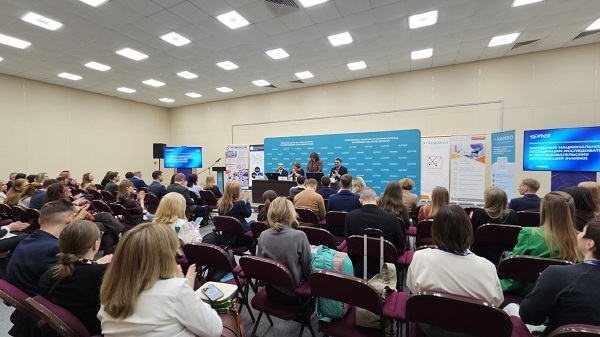
Today a meeting of the National Association of Researchers and Research Organizations (NARRO) was held, at which experts summarized the results of their work and outlined plans for the future. The event was chaired by moderators Artem Poltoratsky (Petrov National Medical Research Center of Oncology of the Ministry of Health of Russia) and Maria Zaitseva (Petrov National Medical Research Center of Oncology of the Ministry of Health of Russia, Chairperson of NARRO).
Opening the meeting, Maria Zaitseva presented the structure, current plans, and strategic prospects for the development of the Association in the Russian Federation, outlining the key vectors of its activity for the near future.
The main part of the meeting was devoted to the status of working groups, each of which presented a report on the work accomplished:
Alexander Solodovnikov, head of the "Regulatory Aspects" working group, reported on the current status of work on regulatory and legal issues in the field of preclinical and clinical research.
Alexandra Sazonova, head of the "Professional and Career Development" group, spoke about the status of initiatives aimed at supporting specialists and developing their competencies in the industry.
Alexander Alikov, General Director of Modern Clinical Solutions LLC, a member of the "QMS" (Quality Management System) working group, presented a report on work related to standardization and quality assurance of research processes.
Vladislav Maslov, head of the "Healthy Volunteers in Clinical Trials" group, highlighted the status of work on issues of recruitment, selection, and safety assurance of healthy volunteers in clinical research.
Tatiana Goldina, head of the "RWE/RWD" group, shared the results of work on collecting and analyzing real-world clinical practice data.
N.S. Reshetova, head of the "Artificial Intelligence in Clinical Research" group, presented the status of implementing AI tools to optimize study design and data analysis.
Mikhail Evseev, head of the "Strategic Feasibility" working group, reported on the status of work to ensure flexibility and resilience of research processes in a changing external environment.
Based on the reports, participants discussed the work accomplished and identified further steps to strengthen NARRO's role as a key platform for dialogue within the country's research community.
Opening the meeting, Maria Zaitseva presented the structure, current plans, and strategic prospects for the development of the Association in the Russian Federation, outlining the key vectors of its activity for the near future.
The main part of the meeting was devoted to the status of working groups, each of which presented a report on the work accomplished:
Alexander Solodovnikov, head of the "Regulatory Aspects" working group, reported on the current status of work on regulatory and legal issues in the field of preclinical and clinical research.
Alexandra Sazonova, head of the "Professional and Career Development" group, spoke about the status of initiatives aimed at supporting specialists and developing their competencies in the industry.
Alexander Alikov, General Director of Modern Clinical Solutions LLC, a member of the "QMS" (Quality Management System) working group, presented a report on work related to standardization and quality assurance of research processes.
Vladislav Maslov, head of the "Healthy Volunteers in Clinical Trials" group, highlighted the status of work on issues of recruitment, selection, and safety assurance of healthy volunteers in clinical research.
Tatiana Goldina, head of the "RWE/RWD" group, shared the results of work on collecting and analyzing real-world clinical practice data.
N.S. Reshetova, head of the "Artificial Intelligence in Clinical Research" group, presented the status of implementing AI tools to optimize study design and data analysis.
Mikhail Evseev, head of the "Strategic Feasibility" working group, reported on the status of work to ensure flexibility and resilience of research processes in a changing external environment.
Based on the reports, participants discussed the work accomplished and identified further steps to strengthen NARRO's role as a key platform for dialogue within the country's research community.